


What is vicarious trauma?
Vicarious trauma refers to when indirect exposure to other people’s Trauma, through repeated exposure to either witnessing, hearing or seeing details of traumatic events, has the same harmful effect on our mental health as experiencing Trauma directly. The effects are cumulative and occur over time to people, often to healthcare professionals, through repeated exposure to traumatic events or experiences. This process has two parts: it is both a consequence of caring about others and their pain AND feeling a need and/or responsibility to help alleviate their suffering.
It is different from empathy, which is relating to and understanding others’ experiences and responses in a compassionate and thoughtful way. It is borne out of a commitment to the people being served and a determination to help ease their suffering. When such committed people feel like they cannot meet that need, and outlets are limited with minimal or ineffective support, they can begin to feel overwhelmed, burdened, resentful and lose hope. It can occur in anyone who works or interacts with people in pain, those in desperate situations or those who need ongoing support after experiencing traumatic events, including healthcare professionals, volunteers and carers.
Many factors can contribute to vicarious trauma, such as lack of safety, cultural factors, inadequate training, minimal support, unrelenting workloads, continued exposure to traumatic material or even personal circumstances and trauma history. In some more rural and remote communities, unique challenges can also increase the risk of vicarious trauma. There is limited access to resources in smaller communities, which can make confidentiality and boundaries more difficult. In some areas, there is a lack of trained health workers attuned to cultural sensitivity and awareness.
Signs and Symptoms
- Feeling off, like you can’t connect to others or feel good about yourself – it can feel like you’re playing a part in a play and not being “in” your life
- Personality changes – feeling mean or cynical
- Misplaced guilt at your own good fortune
- Feeling like your emotions are out of control
- Relationship problems
- Physical issues
- aches and pains
- getting ill more often
- being more clumsy
- Difficulty making good decisions
- A feeling of disconnection to what is important and a loss of meaning and hope in life
- Difficulty managing boundaries – taking on too much, feeling responsible for things that our not your responsibility, taking on other’s problems as your own.
- Increasing substance use or commencing substance use (taking up smoking).

How to go about seeking help
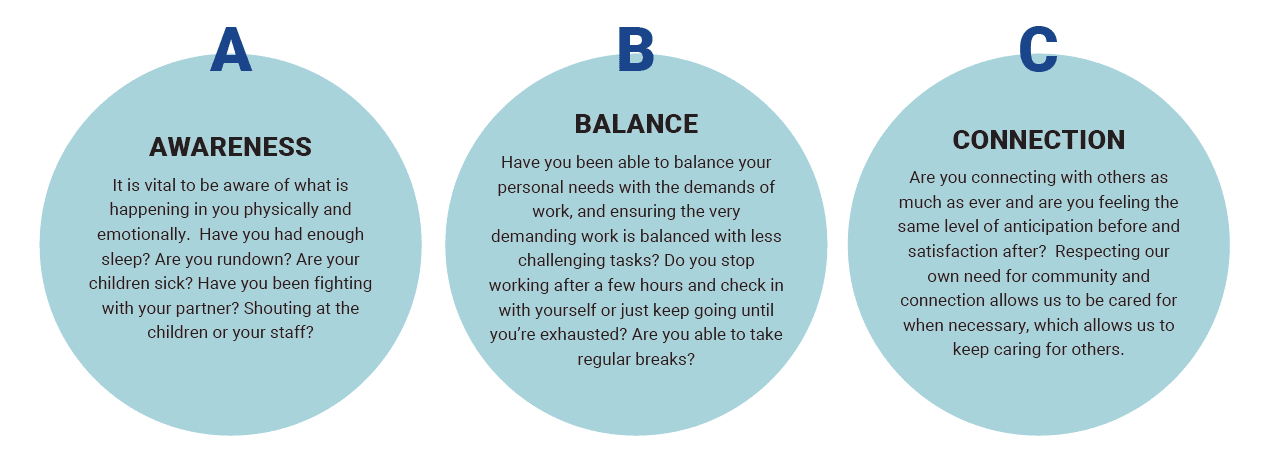
First, check on your abc’s (Awareness, Balance and Connection).
Some of you will be able to adapt to the exposure to others’ distress and recover with some self-care, tapping into some of your coping strategies and strengths and seeking support either inside and/or outside the work environment. Experiencing some level of distress can be considered a normal response to abnormal events. However, not everyone exposed to the same event will be emotionally affected in the same way. It is normal to have some impact on your sleep, energy, experience feelings of numbness or changes to eating habits and maybe reflect on the situation and blame yourself as you try to make sense of it.