

My story is quite long. Its something i have written down and never really got to share. For me the cost has been emotional, cost to my future and my family and the cost of silence.
The Cost of Birth Trauma: My Story
For most of my life, birth was portrayed as one of life’s most beautiful moments. The stories I heard focused on joy, love, and the excitement of meeting your baby for the first time. What I wasn’t prepared for was the reality that birth can also be traumatic, frightening, and life-changing in ways that are rarely spoken about.
This is my story, and the cost birth trauma has had on me and my family.
At 30 weeks pregnant, I was told that my baby was measuring very small. From that point onwards, I attended weekly appointments to monitor his growth and ensure there were no complications. Every appointment came with nervous anticipation, but I reassured myself that everything would be okay.
That changed at my 38-week appointment.
Without warning, I was told that I needed to deliver my baby immediately. There was no time to process the news or prepare mentally. I was sent straight to the hospital to be induced.
Although I had read about induction and thought I understood what to expect, the reality was far different.
The process began with a balloon catheter to help me dilate. The first attempt failed, meaning I had to endure the procedure a second time. It was incredibly painful, uncomfortable and there was no warning or discussion about it. I was then placed on a drip to stimulate contractions. When labour still failed to progress sufficiently, my waters had to be broken manually. Even that didn’t go smoothly, with the first attempt unsuccessful before another nurse was called in to complete the procedure.
Eventually, labour began.
It lasted 30 hours.
After 24 hours of contractions, exhaustion, and pain, I decided to have an epidural. For the first time in what felt like forever, I was able to relax. I even managed to eat something and rest.
Unfortunately, that brief moment of relief didn’t last.
I began noticing more and more doctors entering and leaving the room. I could sense that something wasn’t right. I was then told that my baby’s heart rate was repeatedly dropping before recovering. They needed to assess him immediately.
During the assessment, the doctor’s expression changed.
He calmly explained that he couldn’t remove his hand because my baby’s umbilical cord had prolapsed. I didn’t even know what that meant but based on the expressions of all the doctors and nurses in the room, I knew it wasn’t good. What had been a difficult labour instantly became a life-threatening emergency for both me and the baby.
Everything happened quickly.
A Code Green was called. The room filled with more doctors, nurses, and medical staff. Monitors were disconnected and replaced. People were shouting instructions. The doctor had to keep his hand in place to protect my baby while I was rushed towards the operating theatre.
One moment my husband was standing beside me. The next, I was gone.
I didn’t get a chance to say goodbye. In my head I didn’t know whether I would survive. I didn’t know whether my baby would survive.
It was overwhelming to say the least.
When I arrived in theatre, all I could see were bright lights and countless people surrounding me. Someone placed a mask over my face. I remember trying to pull it away and fighting to get it off me and that was it. Everything went black.
I woke up in recovery about 3 hours later.
Disoriented and heavily medicated, my first thought was of my baby.
I remember a nurse of doctor reassuring me that he was ok.
Shortly afterwards, I was wheeled into the room where my son was waiting.
For the first time, I saw my little boy.
My husband was there too, but everything felt surreal.
Instead of feeling the overwhelming joy I had always imagined, I cried from fear, shock, and trauma.
My boy had been delivered via emergency caesarean section weighing just 1.8 kilograms. During the urgency of the procedure, he had also suffered a deep cut to his head which required treatment and bandaging.
I was devastated by everything that had happened, yet incredibly grateful that he was alive.
Over the following days, my husband explained everything that had occurred while I was unconscious. Even then, it took time for me to fully understand and process the experience.
But the trauma didn’t end when the surgery was over.
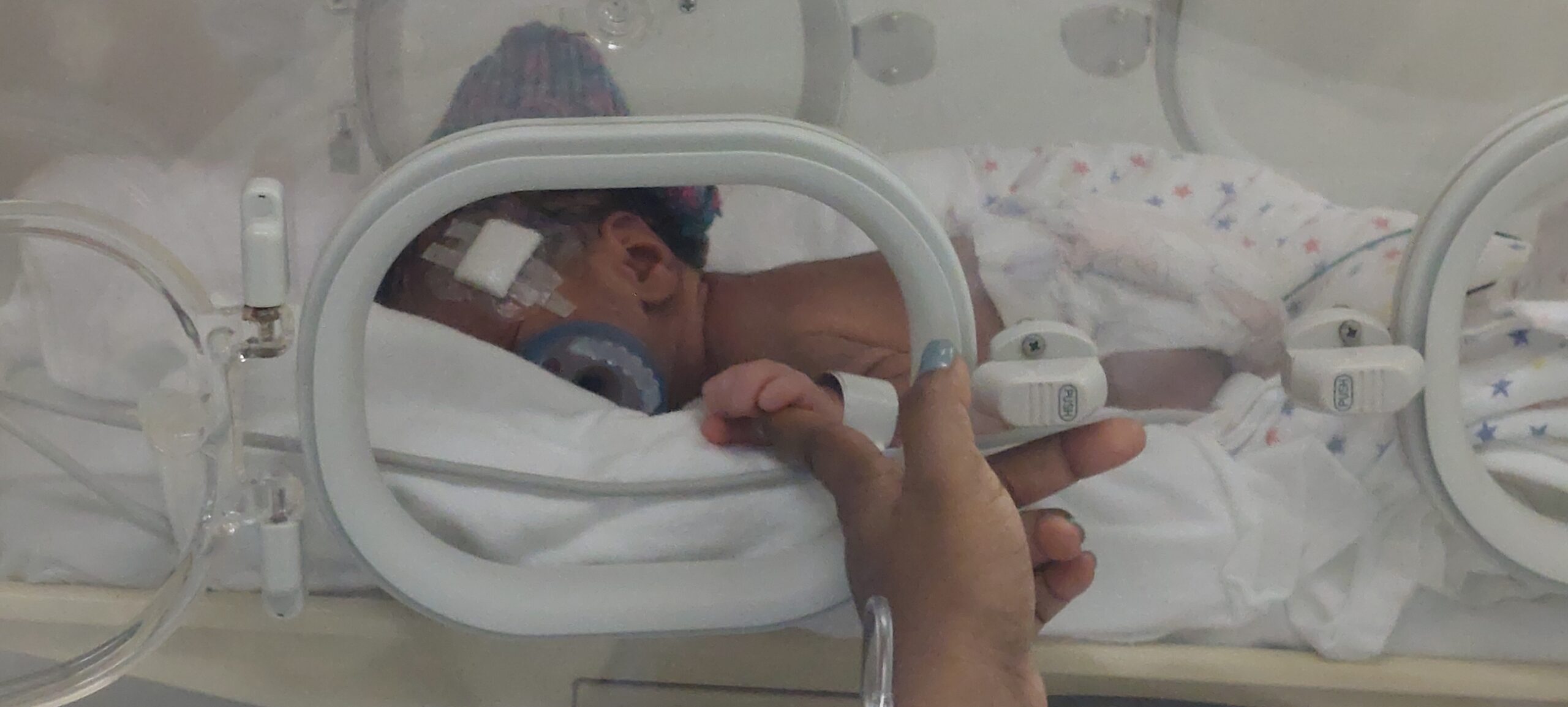
Our little boy spent two weeks in special care.
At the same time, I was recovering from a brutal emergency caesarean section. For at least a week, I struggled to walk. The physical pain was immense. Even now, two years later, I still feel the effects of the surgery.
Every day, my husband and I travelled back and forth to the hospital so we could spend time with our son.
One of the greatest losses for me was missing the “golden hour” that so many mothers talk about. The first cuddle. The first skin-to-skin contact. The first quiet moments together as a new family.
That experience was taken from us.
It is something I still grieve today.
The Emotional Cost
The emotional impact of birth trauma lasted far longer than my physical recovery.
I became consumed by fear.
I constantly worried about my babys wellbeing. I questioned every decision I made as a mother. I became hyper-vigilant and overprotective, convinced that something else might go wrong.
Even though I knew logically that what happened wasn’t my fault, I carried an enormous amount of guilt. I felt as though I had somehow failed my son.
On the outside, I tried to appear happy.
When visitors came to meet him, I smiled and told everyone we were doing well. Inside, however, I was struggling. I replayed the events of his birth repeatedly in my mind. I felt pressure to be grateful and positive because I had a healthy baby.
What I didn’t realise at the time was that you can be grateful and traumatised at the same time.
The two are not mutually exclusive.
Months later, the fear still lingered.
Every time my baby cried, my heart would race. Every night, my mind replayed the events of his birth, trying to piece what happened. I questioned whether there was anything I could have done differently. I mourned the experience I had imagined and the memories I never got to create.
The Cost to My Family
Birth trauma didn’t just affect me.
My husband experienced his own trauma that day.
One moment he was supporting me through labour. The next, he watched me being rushed from the room during a medical emergency.
He was left behind with no certainty about what was happening to either me or our baby.
He has since told me that those moments felt endless.
During the weeks that followed, he carried an enormous emotional burden. He supported me through recovery while processing his own fear and anxiety. He became my strength when I felt like I had none left.
While much of the focus is often on mothers, partners can also carry the weight of birth trauma long after the event itself.
The Cost to My Future
Perhaps the greatest cost has been the impact on how I view the future.
Before my baby was born, I imagined having more children.
Today, the thought of another pregnancy or birth fills me with fear.
The possibility of reliving that experience feels overwhelming. Birth trauma has changed how I think about expanding our family and has taken away the certainty I once had about having more children.
That loss is difficult to explain to people who haven’t experienced it.
The Cost of Silence
One of the reasons I haven’t shared this story until now is because of the expectations society places on mothers.
We are often encouraged to focus on the positive outcome and move on.
“At least you have a healthy baby.”
While that statement comes from a good place, it can unintentionally silence conversations about trauma.
Having a healthy baby does not erase a traumatic experience.
For a long time, I felt guilty talking about what happened because I didn’t want to seem ungrateful. But birth trauma deserves to be acknowledged, discussed, and understood.
I have learnt the reality is that many women leave hospital carrying invisible wounds.
Healing and Moving Forward
Eventually, I sought birth trauma counselling.
It provided a safe space to process my experience and helped me begin my healing journey. Counselling gave me tools to understand what had happened and helped me realise that my feelings were valid.
But healing is not linear.
Even now, 3 years later, the emotions remain close to the surface. I still cry when I think about my sons birth. I still feel sadness for the experience that was lost.
At the same time, I feel immense gratitude.
I am deeply thankful for the doctors, nurses, and healthcare professionals whose expertise saved both my life and my son’s. Their calmness, compassion, and skill guided us through the most frightening moments of our lives.
And most importantly, I am grateful for my son.
He is healthy, thriving, and brings joy to our family every day.
Why I’m Sharing My Story
When people hear the phrase “The Cost of Birth Trauma,” they often think about financial costs or hospital resources.
For me, the cost has been far greater than that.
It has been the cost of lost moments, lost confidence, lost peace of mind, and lost dreams for the future. It has been the cost of anxiety, counselling, recovery, and ongoing emotional healing. It has affected not only me, but also my husband and our family.
Birth trauma does not end when a mother leaves hospital.
Its effects can last for months, years, and sometimes a lifetime.
I am sharing my story because we need more honest conversations about birth. We need better education about what can happen, greater awareness of birth trauma, and stronger support for families navigating its aftermath.
Birth is not always rosy.
Sometimes it is chaotic, frightening, and traumatic.
And until we start talking openly about the full reality of birth, too many women and families will continue to suffer in silence.
While the trauma of my sons birth will always be part of my story, so will his resilience, my family’s strength, and the hope that by sharing experiences like mine, we can help others feel less alone.