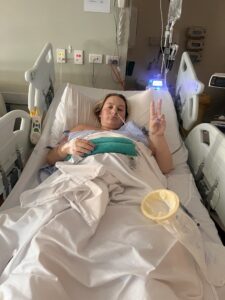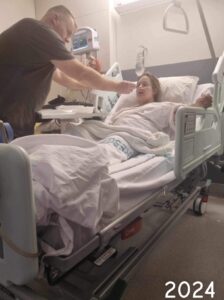


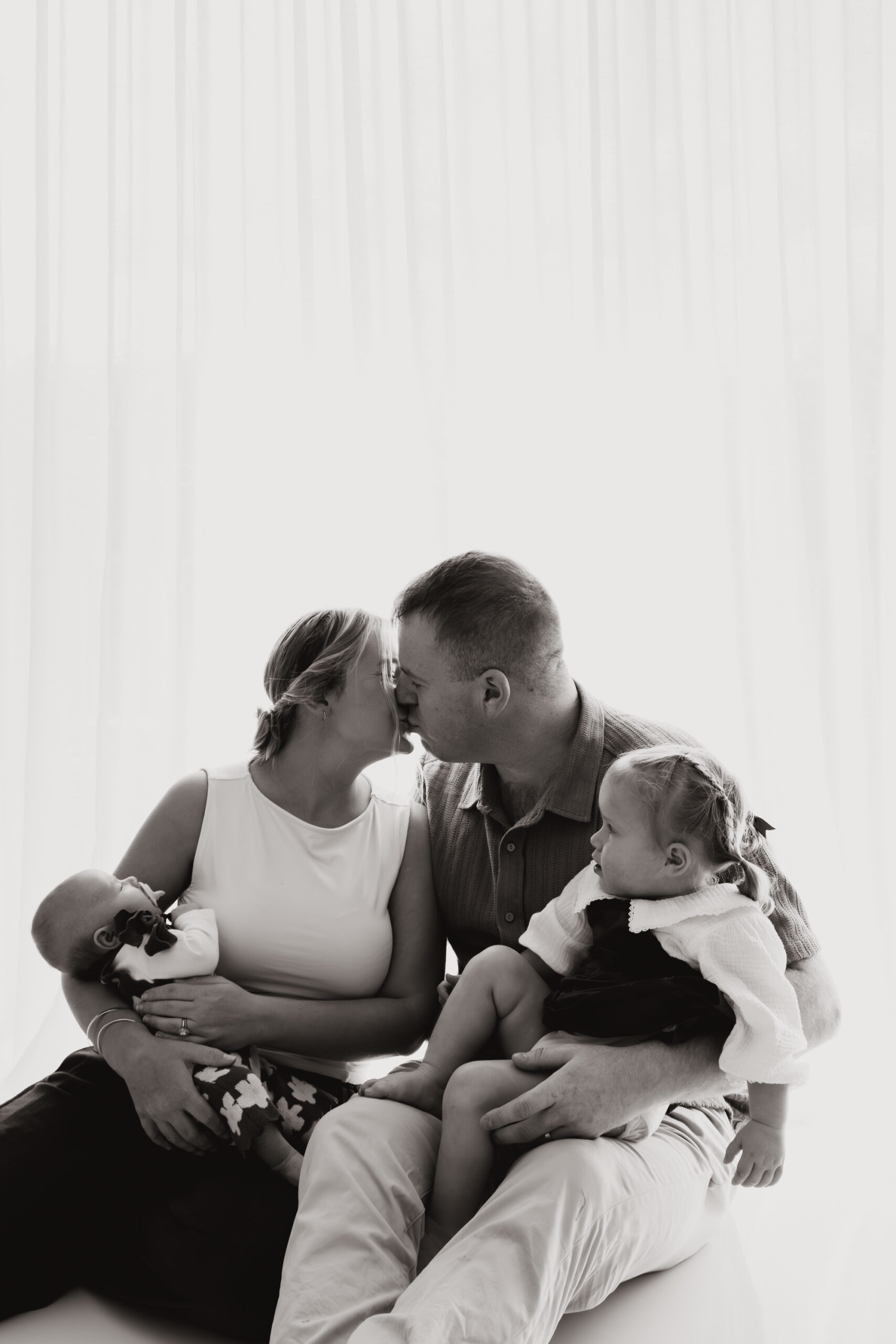
On the 22nd of July 2024, I gave birth to my beautiful daughter Saskia via elective caesarean section.
What should have been the beginning of the most magical chapter of my life quickly became something I never could have imagined.
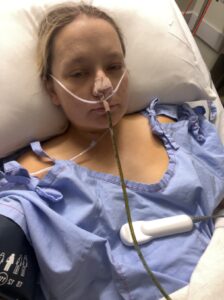
Three days postpartum, I started showing signs of infection — fevers, rigors, and a racing heart. What followed was two gruelling weeks of constant uncertainty. Multiple blood tests, countless failed cannulas, endless rounds of antibiotics, and a caesarean wound that began to break down and become necrotic.
I eventually had to return to theatre for my wound to be debrided and a wound vac dressing placed.
The first days and weeks that were meant to be filled with newborn cuddles, bonding, and soaking in those precious moments were instead filled with fear, pain, and feeling incredibly unwell.
I was so sick that there were moments where I couldn’t even hold my own baby.
I felt robbed of those early days with my first daughter. A time that was supposed to be beautiful was overshadowed by trauma.
Fast forward to the 17th of April 2026, and I gave birth to my second daughter, Harlow.
Because of my previous birth experience, every medical professional involved in my care was aware of what had happened before. I was reassured that the likelihood of it happening again was low, but as a precaution, I was placed on prophylactic antibiotics.
But only 48 hours after giving birth, despite the antibiotics, it started happening again.
The fevers. The rigors. The racing heart.
I was terrified.
I knew what my body had done before, and I was so scared that history was repeating itself.
What followed was a series of events I still struggle to process.
I underwent an ultrasound-guided procedure to try and drain a collection of fluid from my abdomen. This was done under local anaesthetic, meaning I was awake the entire time. When this was unsuccessful, I was taken back to theatre on the 23rd of April for surgery to drain the infection.
When I woke up, I was told that my fallopian tubes had been removed because the infection was so severe that they were no longer able to be saved.
I was also told the infection had spread to surrounding areas, including my uterus, bladder, and bowel.
The surgeons were hopeful. They had washed out the infection, drained the fluid, and with further antibiotics, they hoped my body would recover.
But three days later, I wasn’t improving.
I was getting worse.
My cannulas kept failing, so I needed a PICC line inserted. I was started on TPN feeds because my body was no longer coping normally.
During this time, I was also dealing with a severe ileus. My bowel had stopped working after my caesarean section, and although it had started to resolve, after returning to theatre on the 23rd of April it became paralytic again and remained that way for the majority of my hospital stay.
Despite everything being done, the infection continued to take over.
I had to return to theatre again for an emergency hysterectomy because the infection had damaged my uterus beyond repair.
Despite the hysterectomy and further treatment, I still wasn’t getting better.
My incision began to become necrotic again.
This was when the ICU surgical team sat down with me and explained how serious things had become. I needed another surgery to remove infected tissue and debride the wound.
They told me there was a very real possibility that I could spend the remainder of my recovery “asleep” in ICU — medically sedated, unable to wake up, while my body fought to recover.
This was the 30th of April — only 13 days after giving birth to Harlow.
I was scared.
Not just scared of another surgery, but scared for my life.
I was scared of what life would look like for my husband and my two little girls if things didn’t go the way we hoped. No one could tell me how long I might be asleep for. No one knew what the next days or weeks would bring.
I felt pure fear.
But I tried so hard to stay brave for the people around me.
By this point, I was in so much pain from the ileus and so incredibly weak from the ongoing infection that I couldn’t even walk myself into theatre.
I was wheeled in.
I remember feeling completely terrified.
And somehow, hours later, I woke up.
Not in ICU.
Not in a medically induced coma.
But in recovery, being told that out of all my surgeries, this one had been the most straightforward.
Another wound vac was placed to help my incision heal.
You would think that was the moment I was finally out of the woods.
But my body still had a long road ahead.
My paralytic ileus continued. I continued having fevers, rigors, and episodes of tachycardia despite the huge amount of fluids and IV antibiotics I was receiving.
It wasn’t until the 12th of May that I was finally discharged from hospital.
Those 25 days cost me so much.
They cost me precious time bonding with Harlow.
They impacted my breastfeeding journey.
They took away moments with Saskia that I can never get back.
They took away the ability to have more children.
They impacted my mental and physical health in ways I am still trying to understand.
But one of the hardest parts to process has been the guilt.
The guilt of being away from Saskia during such a huge transition in her life. The guilt of knowing she was adjusting to becoming a big sister while I was in hospital, unable to be there for her in the way I wanted to be.
The guilt of not being able to hold and care for Harlow during those precious newborn days.
The guilt of feeling like I was missing moments I could never get back.
As a mother, those feelings have been some of the hardest to carry.
But alongside all of that pain, I have so much gratitude.
I am endlessly thankful for my husband, Kane, who carried so much through this entire experience. While I was fighting to recover and fighting to come home, he was still showing up every single day — being the best dad he could be for Saskia, making sure her world was as normal and stable as possible, while also being by my side through every scary moment in hospital.
He was navigating the fear of potentially losing his wife, caring for our daughter at home, supporting me through surgeries and uncertainty, and somehow still holding everything together.
I will never forget that.
I am also incredibly grateful for our support system — the people who stepped in when we needed them most.
The people who took turns staying with me in hospital when Kane couldn’t be there, who cared for Harlow when neither of us could.
The people who stepped in to look after Saskia when Kane was by my side.
The people who visited, checked in, brought comfort, and reminded us that we weren’t alone.
It took a village to get us through those weeks.
And while those days changed me forever, they also showed me just how deeply loved and supported we are.
I am now 10 weeks postpartum, and the trauma of what happened has deeply impacted my experience of motherhood after birth. It is something I know I will carry with me for the rest of my life.
I am currently in therapy, working through the fear, the grief, and the guilt. Learning to accept that what happened was completely outside of my control.
It appears that I have an extremely rare autoimmune response to surgery where, in simple terms, my body attacks itself after major surgery.
I had four major surgeries within the space of two weeks.
I share my story because birth trauma is real.
Because birth trauma doesn’t always look like what people expect.
Sometimes it isn’t the birth itself that causes the trauma.
Sometimes it’s what happens after.
Sometimes it’s fighting for your life when you’re meant to be learning how to care for a newborn.
My story is incredibly rare, but I know there are other mothers who have experienced their own versions of fear, loss, grief, and trauma after birth.
I share this for them too.