

Hannah's Story
Hannah is a mother of two and one of Birth Trauma Australia’s community advocates, known for her openness about an experience she has come to call “after birth trauma.” While her son’s birth was, in her words, quick and largely uncomplicated, what happened to her in the hours immediately afterwards would change the course of her life, and, in time, the lives of the women and clinicians she now speaks to across the country.
A Birth That Revealed Something Deeper
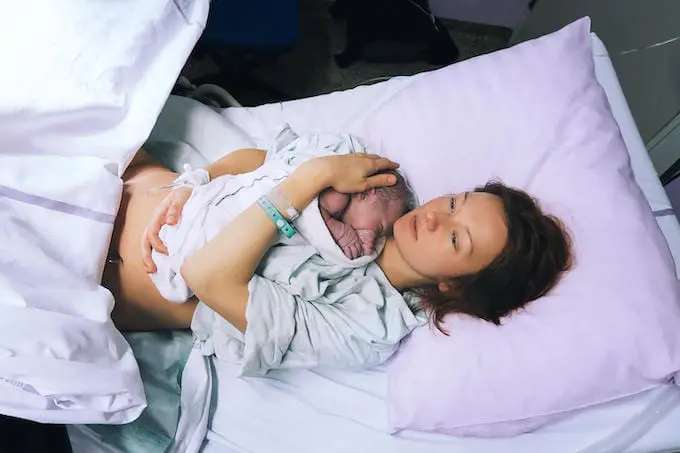
Hannah’s second baby arrived quickly, at home in a flurry of family chaos before a dash to hospital. But a significant tear meant she was taken to surgery under epidural anaesthesia, separated from her newborn, without preparation, support, or anyone to hold her hand. Lying exposed under bright lights, surrounded by clinical small talk, she found herself flooded by a childhood memory she had long buried- of abuse by a swimming coach who later took his own life. The powerlessness of the operating table had unlocked something from decades earlier.
“It triggered something from my past,” is how Hannah has described it. She now distinguishes between birth trauma and what happened next: the after-birth trauma that, unlike the delivery itself, went unnoticed, unasked-about, and unsupported by the very system meant to be caring for her.
From Silence to Advocacy
For years, Hannah told her birth story with humour, believing it was easier for everyone that way. It wasn’t until 2022, during Birth Trauma Awareness Week, that she shared the full, unedited version publicly for the first time, in a personal essay for Mamamia. Putting words to an experience she had minimised for so long marked the beginning of her advocacy with Birth Trauma Australia.
Since then, Hannah has continued to use her voice to push for trauma-informed maternity care, speaking candidly about the gap between physical and psychological care after birth to help educate care providers across the country. Most recently, she shared her story with 55 midwives and maternity educators from across Victoria at a statewide conference hosted by the Royal Women’s Hospital’s Maternity Services Education Program, a room full of the very clinicians whose training could change how the next woman like her is cared for.
Hannah’s willingness to speak openly, again and again, has helped Birth Trauma Australia bring “after birth trauma” into conversations it had never reached before, from hospital wards to classrooms for the clinicians of the future. We’re forever grateful for her continued generosity in sharing something so personal, in the hope that no woman has to carry that particular weight alone.