

Emma and Alicia
There are moments that divide your life into a before and an after.
For Emma, both of those moments came after her babies were born.
She had two pregnancies, two healthy children, and two secondary postpartum haemorrhages. The kind that happen after you’ve already left the hospital. The kind that arrive when everyone assumes the danger has passed. The kind that can turn joy into fear in a matter of minutes.
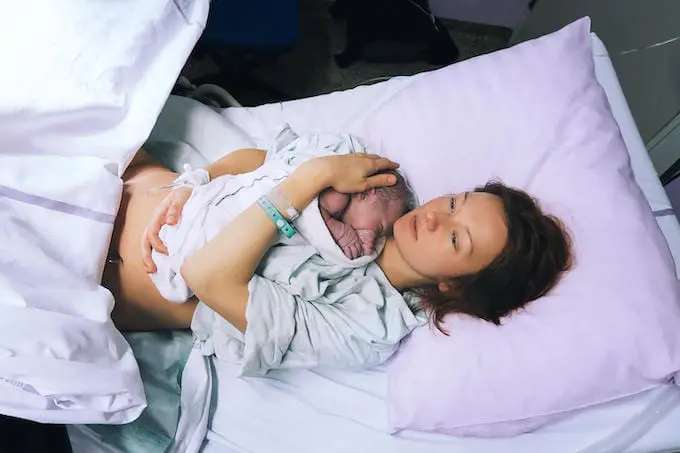
After her first birth, she returned home believing she was beginning motherhood. Instead, she found herself back in hospital, frightened and fighting for her life. When it happened again after her second baby, the trauma was no longer an isolated event. It became a story her body remembered.
“It wasn’t just the haemorrhages,” Emma says. “It was the shock of realising how quickly everything could change, and how invisible that trauma can be afterwards.”
For a long time, she carried that experience quietly. On the outside, she looked like she had the family she had dreamed of. Inside, she was navigating anxiety, grief, and the complicated reality that birth trauma can exist alongside immense love for your children.
What surprised her most was the silence.
People asked about the babies.
Very few asked about her.
The fear had settled deep, but so had something else: a determination that her story would not end with trauma.
She wanted to grow her family. She wanted to reclaim joy. She wanted to believe that life could be bigger than what had happened to her.
Healing was not linear. It came through conversations, therapy, creativity, and slowly allowing herself to be seen. The more she spoke about secondary postpartum haemorrhage, the more she realised how many women had experienced birth-related trauma in different form: haemorrhage, emergency birth, pregnancy complications, loss of control, or simply not feeling heard.
One of those women was her friend Alicia.
Alicia’s pregnancy had been medically complex and emotionally exhausting. Their experiences were different, but the aftermath felt remarkably similar: both had been changed by pregnancy and birth in ways that the world often struggled to understand.
What began as friendship became a shared mission.
They didn’t want to create another awareness campaign filled only with statistics.
They wanted to create something that people could feel.
Together they imagined an art exhibition where scars—physical, emotional, and invisible—could be transformed into beauty.
That idea became Scars of Beauty.
Held in Bendigo, the exhibition invited anyone touched by birth-related trauma to create artwork that represented their journey. Paintings, textiles, sculpture, photography, poetry, and mixed media became expressions of survival, grief, resilience, and hope.
What happened next was extraordinary.
The exhibition became far more than an art show.
Community organisations stepped forward.
Maternal and Child Health nurses created pieces reflecting the families they had walked alongside.
Midwives and nurses from both local hospitals contributed artwork showing birth through the eyes of those providing care.
Doctors, allied health professionals, and support workers added their perspectives.
For the first time, many participants were able to see birth not only through the lens of trauma, but through the shared humanity of everyone involved.
“It stopped being women on one side and the system on the other,” Emma says. “It became a conversation.”
The exhibition raised money for birth trauma support and awareness initiatives, but its greatest impact could not be measured in dollars.
Women who had never spoken about their births stood in front of artwork and whispered, “That’s exactly how I felt.”
Partners cried.
Health professionals reflected.
Conversations that had been buried for years began.
Emma often thinks about how close she came to believing that trauma would define the rest of her life.
Instead, it became the beginning of a different story.
The secondary postpartum haemorrhages left scars.
They also revealed strength she never knew she possessed.
Scars of Beauty was not created because two women were artists.
It was created by mothers who refused to let silence have the final word.
Their vision transformed pain into connection, and connection into community.
Today, every artwork from the exhibition carries the same message: birth can leave wounds, but those wounds can also become places of courage, compassion, and change.
Emma’s journey began in a hospital bed.
It continues in galleries, conversations, and communities where women are finally being asked not only about their babies, but about themselves.
Because healing grows when stories are shared.
And sometimes, the most beautiful things are born from the scars we never expected to survive.
Scars that can, over time, transform into post-traumatic growth, becoming not only a reminder of what was endured, but a reflection of strength, hope, and a different kind of beauty.